








MENU

Click here to request information Click here to contact us

Faculty of Economics Department of Economics

As your business changes


Become a business person who can move quickly

NEWSNotice

Characteristics of Faculty of Economics

In addition to understanding the mechanisms of the economy,
From our daily lives and corporate activities to the global economy,
You will learn a wide range of economics in stages that will be useful for life.

You can learn about not only domestic and regional economies, but also the global economy, focusing on monetary movements overseas.
How will an increase in the consumption tax affect our lives? How will the economy change with exchange rate fluctuations? Learn about the flow of the economy and understand how society works. Gain the knowledge and ability to consider cost-effectiveness, and economic sense.

FEATURES

  • 01

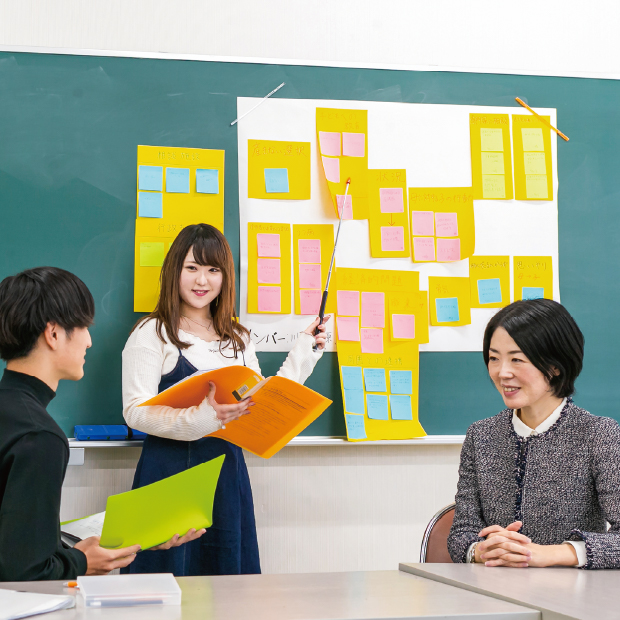
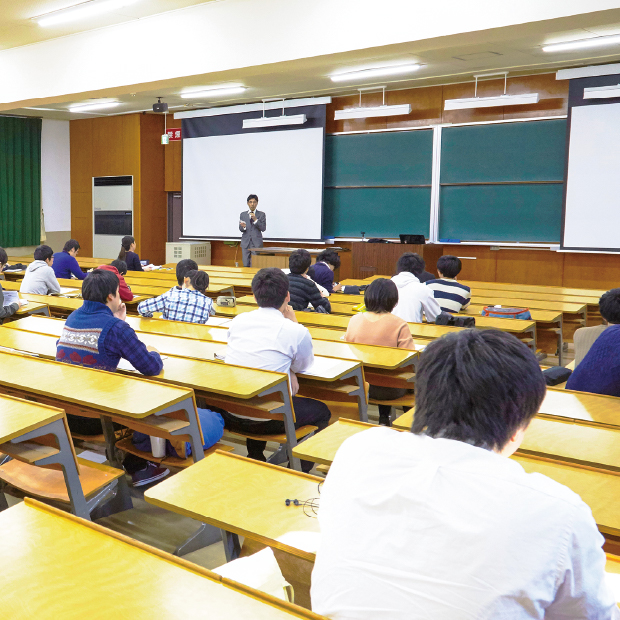
    A wide range of exercises (seminar) with small group instruction

    From the basics of report writing to writing a graduation thesis, students will deepen their learning in specialized areas under the detailed guidance of their instructors.

  • 02

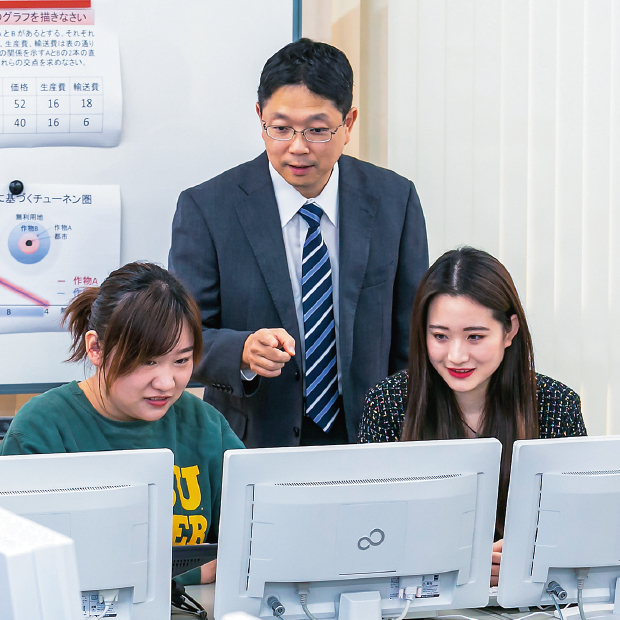
    Establishment of introductory subjects that make economics more familiar

    In order to help students realize that economics is a subject that is familiar to daily life, we have newly introduced subjects that are directly connected to "life." Build a foundation for learning economics.

  • 03

    Step-by-step career education starting from the first year

    You will build your career step by step, from subjects such as English and mathematics to corporate research, presentations, and internships.

  • 04

    Specialized subjects that study society, the region, and lifestyle from multiple angles

    We have a wide range of specialized subjects that you can learn from a wide variety of perspectives, from familiar topics that are directly connected to our daily lives to economic theory that spans many fields.

ABOUT

Course introduction

Four courses and programs available from the first year

From the first year, students are divided into four courses and programs: Economics Course, Advanced Career Course, Civil Service Course, and Tourism Business Course. They explore the topics they want to study and their future career paths and goals based on their interests and aptitudes.

FeaturedSeminars and Labs

  • Tomizawa seminar

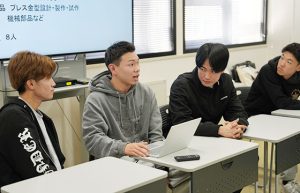
    Tomizawa Seminar Image

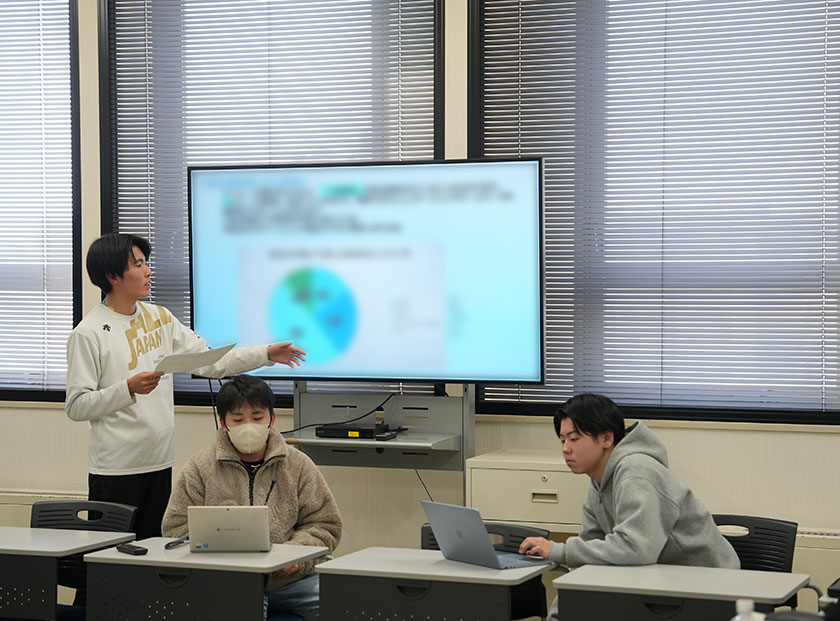
    This seminar will deepen students' understanding of regional economies and small and medium-sized enterprises from the perspectives of industry and business. Students will not only read materials related to regional economies, industries, and tourism promotion, but also engage in practical learning through group work, interviews and research with local companies, and analysis of the results. Our goal is to learn about regional revitalization and small and medium-sized enterprise promotion, to gain energy from seeing adults working hard in the community and realizing that joy can be found in hardship. Through these efforts, students will gain a perspective on the economy and society, which will help them develop their future career paths. Furthermore, students will become familiar with computers, practice writing, and acquire academic writing skills.

  • Kimura seminar

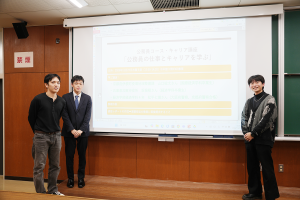
    Kimura Seminar Image

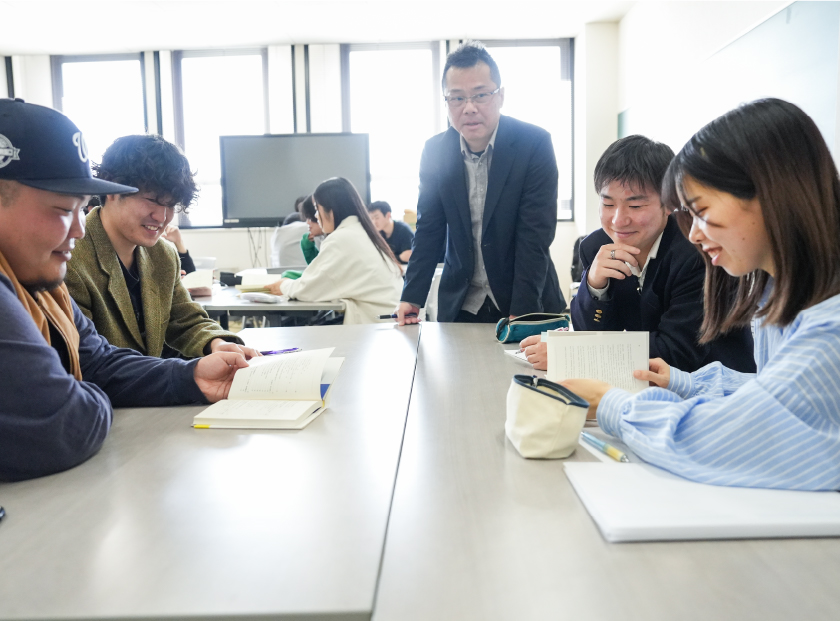
    In our social and economic lives, we sometimes face challenges such as old age, disability, illness, and unemployment. Social security is a system in which society as a whole supports individuals and families facing challenges and guarantees a minimum standard of living for all. The final system within social security is "social welfare." Social welfare serves as an "anchor" within social security. In this seminar, we will hold various discussions on the theme of social welfare. Specifically, members will first take turns reading basic literature, then organize and share the content. After that, each member will set a theme based on their individual interests, and will exchange opinions while repeatedly reading literature and making presentations. Ultimately, students will write a graduation thesis based on what they have learned.

Studying economics

Mr. Taichi Katsumoto

Mr. Taichi Katsumoto

"When I think about my future, this is the only place I can think of."
Learn in advanced career courses

I heard about this course at an open campus, and I decided to enroll because I was very attracted to the unique classes that prepare you for the exam and the aspiring seniors.
Currently, I am mainly studying microeconomics and macroeconomics, and my economics test score is already at university graduation level! Although this course is difficult for those who do not try their best, you will be able to learn through friendly competition with like-minded peers. Many of our seniors have received multiple job offers from major companies, and one of their strengths is that they are good at finding employment.
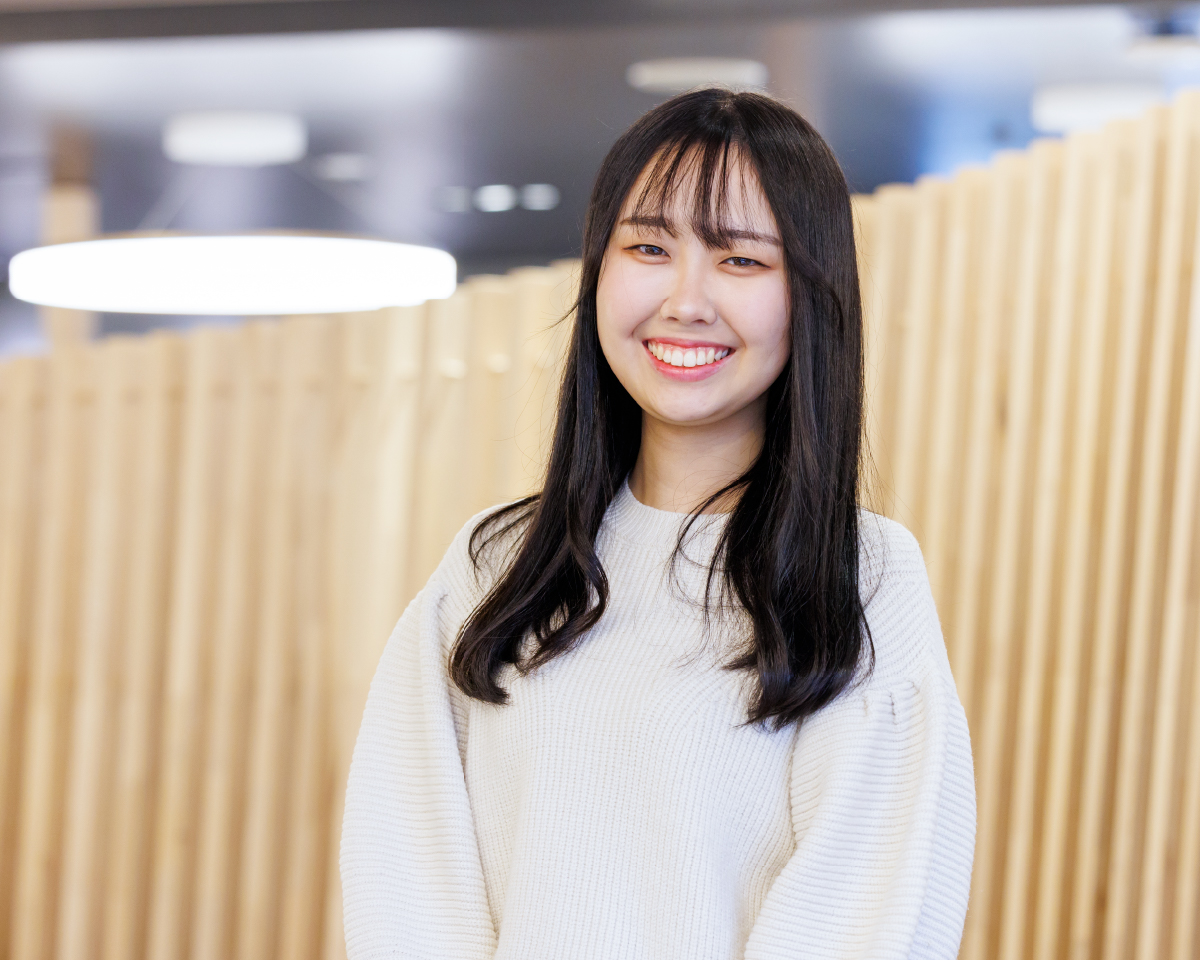

Risa Ito

Risa Ito

While learning about the SDGs
I want to improve my problem-solving skills

In the seminar, we are learning about companies' efforts towards SDGs. Our group's theme is food loss, so our problem-solving skills are improved as we propose various solutions. I became interested in the SDGs after participating in food bank activities in my high school student council, so it's really fun to study a topic that interests me at university.
Since seminars are held in small groups starting from the first year, students can hone their communication skills through presentations and exchanging opinions.

CURRICULUM

  1. 1st year

    Learning how to learn

    Learn introductory economics
    Small group exercises (seminar) also started

  2. 2nd year

    Basic skills development

    While continuing basic learning
    Explore your interests and aptitudes

  3. 3rd year

    Applied skill development

    While learning more about your specialized field,
    Develop economic and social analytical skills

  4. 4th year

    graduation research

    The theme of the paper
    There are a wide range of career options after graduation!

FACULTY

EMPLOYMENT
AND

Private enterprises

  • Iris Ohyama Co., Ltd.
  • Alpen Co., Ltd.
  • ANA X Co., Ltd.
  • Amagasaki Shinkin Bank
  • AEON Retail Co., Ltd.
  • Itoen Co., Ltd.
  • Itochu Foods Co., Ltd.
  • Imabari Shipbuilding Co., Ltd.
  • Osaka Kosei Shinkin Bank
  • Osaka Municipal Subway Co., Ltd. [Osaka Metro]
  • Kansai Mirai Bank, Ltd.
  • Japan Post Insurance Co., Ltd.
  • Keyence Corporation
  • Bank of Kyoto, Ltd.
  • Kintetsu Railway Co., Ltd.
  • Keihan Electric Railway Co., Ltd.
  • Cosmos Pharmaceutical Co., Ltd.
  • Shimamura Co., Ltd.
  • Sumitomo Life Insurance Company
  • Sumitomo Real Estate Sales Co., Ltd.
  • Sumitomo Forestry Home Services Co., Ltd.
  • Sekisui House, Ltd.
  • Sompo Japan Insurance Inc.
  • Daiwa House Industry Co., Ltd.
  • Tsubame Express Co., Ltd.
  • Nippon Telegraph and Telephone West Corporation [NTT West]
  • West Japan Railway Company [JR West]
  • Japan Post Co., Ltd.
  • Fukuya Holdings Co., Ltd.
  • Mitsui Fudosan Realty Co., Ltd.
  • Meiji Yasuda Life Insurance Company
  • Yanmar Holdings Co., Ltd.
  • Juchheim Co., Ltd.
  • Ricoh Japan Co., Ltd.
  • Louis Vuitton Japan Co., Ltd.
  • World Co., Ltd.
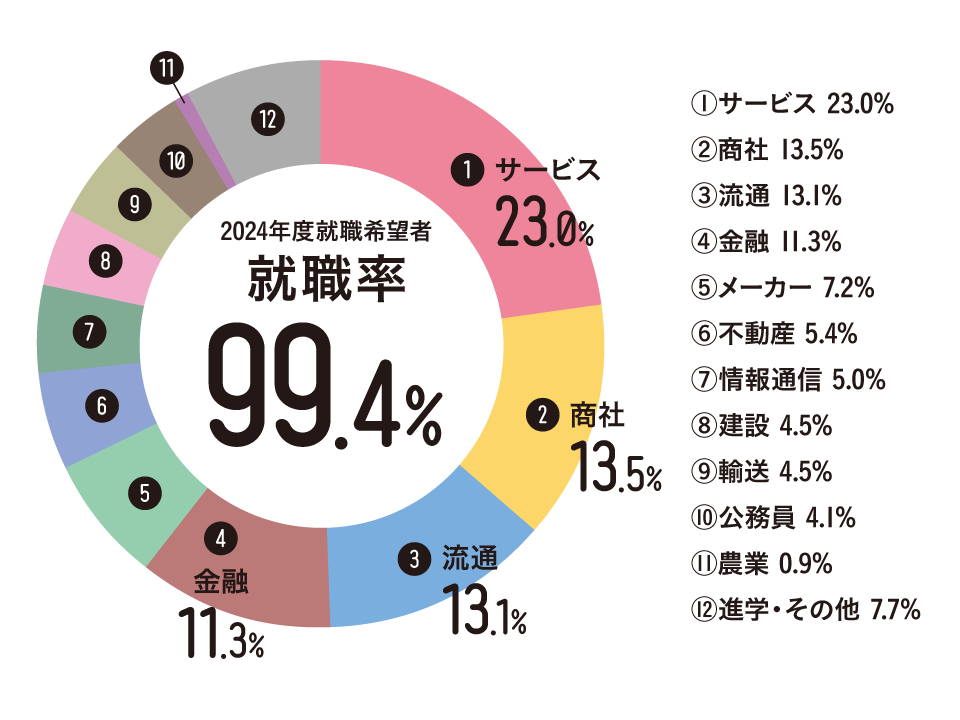
Employment rate 99%

public sector

  • Osaka City Hall
  • Shinonsen Town Hall
  • Kato City Hall
  • Ine Town Hall
  • Itami Fire Department
  • Osaka City Fire Department
  • Toyooka City Fire Department
  • Hirakata Neyagawa Fire Department
  • Fukui City Fire Department
  • Matsue City Fire Department
  • Osaka Prefectural Police Headquarters
  • Kyoto Prefectural Police Headquarters
  • Nara Prefectural Police Headquarters
  • Hyogo Prefectural Police Headquarters
  • Finance Bureau [Kinki Finance Bureau]
  • Ministry of Justice [Prison Officer]

Osaka Sangyo University Graduate School

  • Osaka Osaka Sangyo University Graduate School
  • Kobe Osaka Sangyo University Graduate School
  • Osaka Kyoiku Osaka Sangyo University Graduate School
  • Osaka Municipal University Osaka Sangyo University Graduate School
  • Kansai Osaka Sangyo University Graduate School
  • Kwansei Gakuin Osaka Sangyo University Graduate School
  • Naruto Osaka Sangyo University Graduate School
  • Ritsumeikan Osaka Sangyo University Graduate School

national civil servant

Qualifications that can be obtained at the same time as graduation

  • Junior high school teacher's license (social studies) ※1
  • High school teacher's license (civics) ※1
  • High school teacher's license (geography and history) ※1

It is necessary to acquire the required subject credits in the teacher training course.

During or after graduation
Qualifications you want to achieve

  • certified public accountant
  • tax accountant
  • Small and Medium Enterprise Consultant
  • Social insurance labor consultant *2
  • Financial
  • Planning Technician (FP Technician)
  • Real estate transaction specialist
  • customs broker
  • Travel business handling manager
  • IT passport exam

Students can take the exam if they have completed 62 or more credits of regular courses, which are the graduation requirements.

Public/private qualifications

Qualifications that can be obtained at the same time as graduation

  • Qualifications for social welfare director appointment *3

Specific subjects must be completed and students must graduate.

During or after graduation
Qualifications you want to achieve

  • Retail Marketing (Salesperson) Certification
  • Bookkeeping test
  • Secretary skill test
  • Trade practical examination
  • Medical office certification
  • Business Practices
  • Legal Examination
  • travel geography test
  • Microsoft® Office Specialties (Word/Excel)

ORIGINAL SITE & SNS


Learn what it's really like to study in this department through videos and articles from current students!

POLICYEducational

  • Educational and research objectives

    Department of Economics conducts research focusing on various aspects of economic and social systems in an economic society where informationization and internationalization are progressing, and the research objective is to clarify the mechanisms. Based on the knowledge gained there, they will have the ability to understand the basic knowledge of economics and the mechanisms of economic society, decipher the ever-changing modern society, and become responsible actors who will confront various social issues and develop the future. The educational purpose is to develop children.

  • Educational goals/
    three policies